The Things We Carry
When a woman she meets dancing disappears into Soho at dawn, insurance investigator Rachel Wrenford follows a misplaced phone into an adventure neither expected.
At four seventeen in the morning, Rachel Wrenford discovered she had two phones, no coat, and no idea how to find the woman she had been kissing.
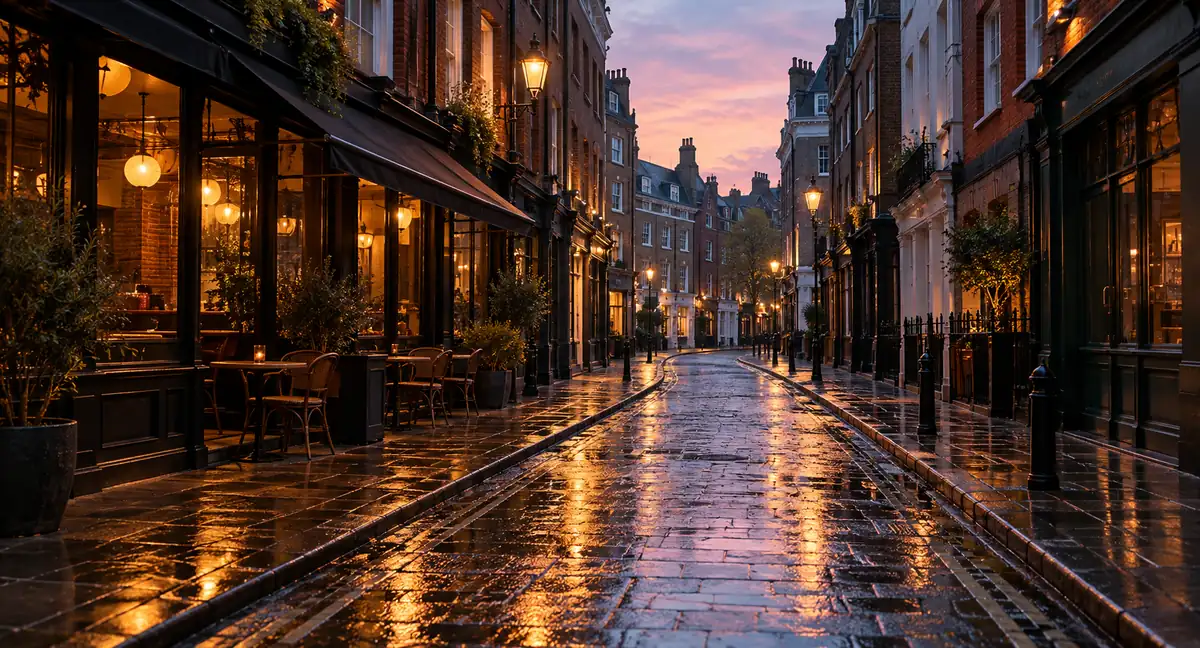
Around her, the last customers of the Nightjar were negotiating the stairs with the solemn concentration of mountaineers. Beyond the open doors, Soho gleamed with rain. Someone had lost a shoe. Someone else was insisting that breakfast was a political necessity.
Rachel touched the unfamiliar phone in her trouser pocket.
Green case. Cracked corner. A small silver moon beneath the camera.
Kim’s.
Twenty minutes earlier, Kim Aldercombe had placed it in Rachel’s hand and said, “You have pockets. I’m trying very hard not to find that sexually compelling.”
Rachel had put it away.
Then there had been another song.
Then another.
Now the club was closing for ever, and Kim had disappeared.
“Looking for something?” asked the doorman.
“A woman. Dark hair, silver shirt. Taller than me.”
“That narrows it down to approximately Soho.”
Rachel looked at him.
He straightened slightly.
“Sorry.”
“Don’t apologise. It was almost funny.”
Fourteen years investigating maritime claims for Bellwether Underwriting had refined Rachel’s ability to ask useful questions. Before that, three years working club doors had taught her when to stop asking and look.
She moved aside from the stream of people and surveyed the pavement.
No silver shirt.
No black curls clipped badly back.
No woman who had spent the previous four hours making Rachel forget that Monday contained a difficult meeting about a promotion she wasn’t sure she wanted.
For the first time that night, Rachel felt cold.
She had come to the Nightjar because leaving things properly mattered.
At thirty-nine, she had attended enough leaving drinks, office reorganisations and funerals to know how often people mistook an email for an ending. The Nightjar had been one of the first doors she worked. Its owner was retiring. The basement lease was finished.
She wanted one last night beneath the low ceiling where the bass used to travel through her boots.
She had not expected Kim.
Their first conversation happened beside a speaker that had begun making an ugly crackling noise.
“Don’t stand there,” Kim said.
Rachel looked down at the drink in her hand.
“I’m not spilling it.”
“The cabinet above you is walking.”
Rachel glanced up. On its bracket, a smaller speaker was shifting almost imperceptibly with each bass note.
She moved immediately.
Kim signalled the DJ, who misunderstood her twice. Rachel crossed to the booth, caught his eye and used the unmistakable flat-handed gesture that had once stopped fights before they started.
The music cut.
Kim climbed onto a solid bench, checked the bracket and tightened something with a tool produced from her tiny bag.
Thirty seconds later, the room roared back to life.
“You carry a screwdriver clubbing?” Rachel asked.
“Multitool.”
“Very different.”
“Emotionally.”
Kim had a composed face, a crooked front tooth and the kind of direct gaze Rachel associated with people who checked their own calculations.
“You knew what I meant,” Kim said.
“About the speaker?”
“Most people look at the floor.”
“Former door staff.”
“That explains the voice.”
“What voice?”
“The one that makes grown men reconsider.”
Rachel laughed.
Kim was thirty-seven, an audio engineer who restored old recordings and occasionally kept elderly sound systems alive through persuasion and solder. Rachel explained marine insurance. Kim asked whether ships were more or less troublesome than musicians.
“Ships rarely claim the damage was already there when there’s footage of them hitting the quay.”
“You’ve met very different musicians.”
Then Kim held out her hand.
“Do you dance, former door staff?”
Rachel did.
For hours, they moved through old house tracks and songs Rachel remembered from taxi radios at six in the morning. They talked in fragments. Kim liked strong tea, hated voice notes and rented a flat in Kentish Town above a man who practised the clarinet with admirable persistence.
Rachel admitted she had once confiscated a live ferret at a club entrance.
“Was it on the list?”
“It was in a handbag.”
“That wasn’t my question.”
Later, in the corridor outside the toilets, Kim said, “I’m going to regret it if I leave without asking to kiss you.”
Rachel put down her glass.
“Then ask.”
Kim did.
Rachel said yes.
The kiss was unhurried at first, then considerably less so. Kim’s hand settled at Rachel’s waist; Rachel felt the warm curve of her neck beneath her fingers. When they drew apart, they stayed close enough for their foreheads to touch.
“Good question,” Rachel said.
“I’m told those matter in your line of work.”
They had gone back to dance.
Now Rachel stood beneath a shop awning while someone washed beer from the Nightjar’s steps.
She had spent half her working life finding out what happened after people stopped paying attention.
Apparently, she was about to spend her Saturday doing it too.
Kim’s phone was locked. The screen held a photograph of a shabby grey cat looking offended by a radiator.
Rachel didn’t try guessing the code.
Back inside, she found the cloakroom attendant and recovered her coat, then asked the night manager whether he knew Kim.
“Sound woman,” he said, counting till receipts. “Gerry knows her.”
“Where’s Gerry?”
“Gone home. He’s seventy-two.”
“Very sensible of him. Could you call him?”
The manager looked at her face, then reached for his phone.
Gerry answered on the fourth attempt, sounding like a man who had removed both his hearing aids and his goodwill.
Rachel identified herself.
“Little Rachel? You threw that drummer out.”
“He was swinging a fire extinguisher.”
“He sent flowers.”
“To his girlfriend. After throwing it at her.”
A pause.
“Yes. Fair distinction.”
Gerry knew Kim because she had spent six months preserving the club’s old recordings. Interviews, live sets, cassette messages from DJs who had moved abroad. The Nightjar had existed for forty-three years; its history occupied a cupboard beside the cellar.
“She’s taking the originals to the collection people this morning,” he said. “The listening exhibition. Upstairs at the community arts place next week.”
“Do you have her number?”
He did.
Rachel rang it from her own phone and watched the green-cased phone light up.
“Progress,” she murmured.
Gerry gave her the address of Kim’s shared workshop off Berwick Street. He was less certain of the building number.
“Blue door.”
Half the service doors in Soho were blue.
Rachel left a message on Kim’s phone anyway, giving her own number and saying she had it. Then she wrote the same information on a receipt for the club manager.
Outside, a bakery van hissed to a halt. The sky had begun to lose its darkness.
Rachel could leave the phone with Gerry later.
That would be sensible.
Instead, she walked towards Berwick Street.
The blue door belonged to a tailoring business.
The next belonged to a private dining room.
The third opened when Rachel knocked, revealing a man in slippers carrying a roll of gaffer tape.
“Kim Aldercombe?”
“Moved out in February.”
“Of course she did.”
“Who are you?”
Rachel explained, holding up the phone without surrendering it.
The man’s expression softened.
“Oh. She’ll be beside herself.”
Rachel tried not to take too much pleasure in that.
“Because of the phone?”
“Everything’s on it. She had a collection this morning. Van hire, contact numbers.”
“Where is she working now?”
“Mostly at home. Some bench space near King’s Cross. Don’t have the address.”
The promising lead ended there.
He offered to message her, then realised the problem.
Rachel thanked him and stepped back onto the street.
Her feet hurt. Glitter had lodged beneath her watch strap. Somewhere a bottle fell into a bin with a noise like a small building collapsing.
She considered the facts.
Kim had not gone home for her phone. She had not asked the club staff for it. She had vanished during the last rush, when people were collecting coats and equipment was being moved.
Rachel went back to the Nightjar.
This time, she asked a different question.
“Who saw Kim leave?”
The doorman rubbed his eyes.
“Silver shirt? Side passage. Talking to a bloke with a trolley.”
“Did she leave with him?”
“Don’t know.”
“Was she walking, or running?”
He thought.
“Running. Afterwards.”
Rachel’s tiredness receded.
“Show me which way.”
The passage emerged onto a service yard where dawn exposed every stain.
A woman in a quilted jacket sat on an upturned crate, guarding a stack of lighting equipment.
Rachel recognised her.
“Sal?”
The woman looked up.
“Wrenford. Bloody hell.”
They had worked neighbouring doors seventeen years earlier. Sal now coordinated venue clearances, which seemed a natural progression from removing troublesome people.
Rachel described Kim.
“Saw her half an hour ago,” Sal said. “Went to report a van stolen.”
“A van?”
“Hired one. Parked round the corner. Came out and it was gone.”
Rachel glanced towards the empty stretch of kerb beyond the yard.
“Did she say where she was going?”
“Police station. I lent her my phone first.”
“Which station?”
Sal named one within walking distance.
For a moment Rachel simply stood there, holding the green phone.
Then she said, “Thank you.”
“You look worried.”
“I’ve got something of hers.”
Sal’s eyes moved to Rachel’s mouth, where the remains of Kim’s lipstick probably told a fuller story.
“Apparently.”
Rachel found Kim outside the station shortly after six.
She was sitting on a low wall in the silver shirt, with a borrowed navy sweatshirt over it. Her elbows rested on her knees. She looked up at approaching footsteps and stood so quickly that Rachel stopped.
“You,” Kim said.
“Me.”
“I went back. You’d gone.”
“I went looking.”
“I remembered the phone halfway here.”
Rachel held it out.
Kim took it, then caught Rachel’s wrist with her free hand.
“I wasn’t leaving like that.”
“I was beginning to suspect a dramatic approach to avoiding breakfast.”
Kim’s laugh shook once and failed.
“What was in the van?” Rachel asked.
The hand around her wrist tightened briefly before letting go.
“Equipment. Mine, mostly. Two restored amplifiers. A desk.”
“And the recordings?”
Kim nodded.
“Forty-three years in three cases.”
Traffic murmured beyond them. A street sweeper moved along the opposite pavement, its orange light turning.
“The exhibition has listening copies,” Kim said. “Some of it’s digitised. But twelve reels haven’t been transferred yet. Gerry found them behind a false panel on Thursday.”
“Insured?”
“Yes.”
“That wasn’t criticism.”
“I know. Sorry.”
“What did the police say?”
“Reported. Registration circulated. No tracker. No useful council camera facing where I parked. I’ve got a reference number and a powerful desire to be sick.”
Rachel sat on the wall.
“Start at the last moment you definitely saw it.”
Kim looked at her.
“You’ve been awake all night.”
“So have you.”
“You don’t owe me a working Saturday because we kissed.”
“No.” Rachel met her eyes. “I’m offering you a cup of tea and some questions.”
After a moment, Kim sat beside her.
“In that order?”
“I’m unusually flexible before seven.”
The café smelled of hot bread and cleaning fluid. They took the table nearest the radiator.
Kim had hired a white van, loaded the three archive cases and her equipment at ten, then parked in a legal overnight bay while the club remained too crowded to move anything else. She had the key. The rental company had confirmed it had not collected the vehicle.
“At four, I went out with a bag of cables. No van.”
“Who knew what was in it?”
“Gerry. Sal’s people. Anyone who watched us load.”
“Anything distinctive about it?”
“A dent in the rear door. Blue hire-company sticker.”
“Did anyone else drive it?”
“No.”
Rachel stirred her tea.
“Why were you talking to someone with a trolley?”
“He was putting my monitor stands into his load. Wrong pile. Everything was marked for collection, but the labels were a mess.”
“What kind of labels?”
Kim found a photograph on her phone.
A row of flight cases stood in the service yard. Yellow tape crossed each handle. On Kim’s cases, someone had written ARCHIVE — HOLD.
Beside them stood a battered grey case marked STAGE L.
Rachel enlarged the photograph.
“Who took this?”
“Me. Before loading. Why?”
“Just establishing when everything was where.”
Kim drank half her tea in one determined movement.
“The grey one belongs to the clear-out people. I nearly loaded it. Same tape.”
Rachel looked up.
“Same person labelled both lots?”
“Gerry. His system was apparently yellow for ‘things’.”
Outside, delivery workers unfolded handcarts. Soho was changing shifts.
Rachel asked about every conversation Kim remembered, every vehicle in the yard, every instruction about parking. Some questions produced nothing. Others contradicted what Sal had said.
Kim had been told to leave the van’s registration with the night manager in case access was needed.
The manager had said Sal controlled all vehicle movements.
Sal had said she wasn’t responsible for the street.
Nobody had actually said they had watched a thief drive away.
Rachel set down her spoon.
“Before we assume theft, I want to eliminate removal.”
“I checked the council pound.”
“Good. Now let’s check everyone who thought they were helping.”
Back at the club, Sal was supervising two men lowering a chandelier into a crate.
She listened without interruption.
“No one had authority to touch that van.”
“Did anyone think they had authority?” Rachel asked.
Sal pulled out a folded movement sheet.
The yard had to be empty by nine. A clearance company was collecting redundant furniture. Another carrier had taken sound equipment to a storage depot. A recovery truck had removed an old refrigerated trailer from the rear access.
Rachel pointed.
“This truck. What time?”
“Three fifty.”
Kim went still.
“My van was across the mouth of that access.”
“Legally?”
“On the marked bay. There’s room beside it.”
“Room for a recovery truck?”
Sal swore softly.
She called the clearance dispatcher.
The answer came through loudly enough for both women to hear.
Trailer removed. Also a white van, as instructed. Taken to the temporary holding yard.
“I did not instruct that,” Sal said.
The dispatcher read from a job note.
“Site says white vehicle by rear entrance also to go. Keys unavailable. Winch load.”
Rachel held out her hand for the phone.
“My name’s Rachel Wrenford. I’m here with the van’s hirer. We need the exact instruction and the address where it was delivered.”
“You’ll have to speak to the office at eight.”
“Is the van secured?”
“It’s in our yard.”
“Have you personally seen it?”
A pause.
“No.”
“Then please call the driver.”
Kim looked at Rachel with an expression she hadn’t seen on the dance floor.
Rachel handed the phone back.
“What?”
“You didn’t let him turn a guess into a fact.”
“It causes paperwork.”
Five minutes later, the driver confirmed he had delivered both vehicles to a yard in Acton.
Kim exhaled so sharply she bent at the waist.
Rachel resisted reaching for her until Kim straightened and offered her hand.
Then she took it.
The taxi west cost enough to offend both of them.
In the back seat, Kim rested her head against the window while brick terraces and early buses slid past.
“I should have taken the cases straight home.”
“You had agreed storage at the club and a morning collection. That isn’t carelessness.”
“I thought I could have one night.”
Rachel understood that more than she wanted to.
Kim turned.
“What’s happening Monday?”
Rachel blinked.
“You mentioned a meeting. Before the song with the terrible trumpet.”
“It’s a very good trumpet.”
“It sounds like a goose discovering tax.”
Rachel smiled, then watched a cyclist pass their stationary cab.
“They want me to manage a team. More money. Less investigating.”
“And?”
“I’ve been there fourteen years. I’m good at the work. Everyone keeps explaining that advancement means doing less of it.”
“You don’t sound convinced.”
“I’m not.”
Kim waited.
Rachel found she wanted to fill the silence honestly.
“My last relationship ended partly because I was never quite off duty. Delayed dinner, postponed weekends. There was always one more question.”
“Was she wrong?”
“No.”
Kim nodded, accepting the uncomfortable answer without trying to polish it.
“This morning doesn’t count as a recommendation for work-life balance,” Rachel said.
“No. But I’d distinguish between being unavailable and choosing to help.”
Her hand lay on the seat between them.
Rachel put hers beside it. Their little fingers touched.
Neither moved away.
The yard in Acton contained the refrigerated trailer, three damaged cars and no white van.
Kim stopped just inside the gate.
A man in a fluorescent vest emerged from a portable office carrying a mug.
“Aldercombe? We’ve had a mix-up.”
Rachel felt the small tightening behind her ribs that always preceded a claim becoming expensive.
“What kind?”
“The truck dropped the van beside the outbound vehicles. Another driver collected it.”
“Where did he take it?”
“Working on that.”
Kim’s voice became very calm.
“There are irreplaceable recordings inside.”
The man looked from her to Rachel.
“It’s probably at our other site.”
“Probably,” Rachel said, “is what brought us here. Let’s use the records.”
They spent forty minutes in the office.
The computer system showed the van as delivered, not dispatched. The gate camera had stopped recording two days earlier. A handwritten sheet listed two transporters leaving between five and six.
One carried auction vehicles to Essex.
The other carried a single white van to a dismantler outside the M25.
Kim went pale.
“Please tell me that doesn’t mean what it sounds like.”
The yard manager was already calling.
Rachel asked for the vehicle sheets.
The dismantler was closed until Monday. Its driver answered from a lay-by, read back a registration and eliminated that possibility.
The transporter bound for Essex did not answer.
“Could be driving,” the manager said.
“Then send a message telling him to stop safely and call.”
Rachel examined the handwritten entries again.
Two white vans had occupied adjoining spaces. One had a failed engine and an auction destination. One contained the Nightjar’s history.
Only the last three characters of each registration had been written on the dispatch sheet.
Both ended in LXN.
“Oh, that’s special,” she said.
Kim leaned over her shoulder.
“What?”
Rachel showed her.
The other woman closed her eyes.
In the silence, Rachel became aware of how near they stood. Kim’s shoulder brushed hers; beneath fatigue and stale club air, she smelled faintly of orange soap.
Then the manager’s phone rang.
The transporter had reached a commercial auction warehouse near Thurrock.
Its load had already been accepted.
They could not make the next decision on empty stomachs.
Rachel bought sandwiches from a petrol station while Kim spoke to the police, the rental company and the archive’s curator. The theft report needed updating. The hire company needed to authorise release of its vehicle. The curator needed to know the collection would be late.
When Rachel returned, Kim was sitting on the low wall outside the yard with her face in her hands.
Rachel placed a sandwich beside her.
“Cheese. It was that or something whose best-before date looked aspirational.”
Kim lifted her head.
“I’m sorry.”
“For the sandwich?”
“For this being your morning.”
Rachel sat.
“You can be sorry about the circumstances. You don’t have to apologise for me making a decision.”
Kim pulled the wrapper open, then stopped.
“The new reels. One has my mother on it.”
Rachel waited.
“She ran lights here in the nineties. Gerry recorded people talking after the last set sometimes. About work. Rent. Who was in love with whom.”
“Is she—”
“Alive. In Bristol. Very bossy.” Kim smiled briefly. “She had a stroke three years ago. Her speech is different now. Slower. She gets tired.”
Rachel looked towards the yard, where a forklift reversed with three sharp beeps.
“She wants to hear it?”
“I haven’t told her it exists. I don’t even know what’s on it. But she met my other mum at the club. It might be an ordinary night when they were young.”
The sandwich wrapper crackled in Kim’s hands.
“I restore strangers’ voices all the time. I wasn’t ready for this one.”
Rachel reached across the small gap between them.
Kim turned her hand palm-up.
For a while they sat without speaking.
Then Rachel said, “We need written confirmation that nothing gets unloaded.”
Kim nodded, wiped her eyes with the heel of her hand and made the call.
The auction office confirmed the van had arrived. The registration error was recognised. Release could be arranged once the rental company sent its paperwork.
Then Kim asked whether the doors were still sealed.
“They weren’t sealed,” the clerk said.
“They were locked.”
“There’s an intake photograph showing them open.”
Rachel took the phone when Kim offered it.
“Has the contents been inventoried?”
“It’s a non-runner disposal lot. Loose contents get separated.”
“Separated where?”
“I’ll ask.”
Hold music tinkled.
Kim stared across the road at a row of tired poplars.
Rachel wanted to make a promise. She knew better.
Instead she said, “We know where it is. That’s better than an hour ago.”
The clerk returned.
Two amplifiers and a mixing console were in the electronics intake area. Three black flight cases had gone to general effects.
General effects was handled by a different business in the same complex.
Its Saturday sale began at noon.
Rachel checked the time.
Ten twenty-six.
“Tell them those cases are disputed property and must be held.”
“We’ve sent an email.”
“Call them.”
“I don’t have a direct—”
“Then walk across.”
Her voice had changed.
Kim’s eyes flicked towards her.
The clerk went quiet.
Rachel softened it deliberately.
“Please. They contain archive recordings. We’re coming with proof of ownership. An email won’t help if nobody opens it.”
This time, the clerk said she would go herself.
Sal lent them a vehicle and a driver from her clearance crew, partly from kindness and partly, Rachel suspected, because she wanted the mess resolved before insurers became involved.
The driver, Dev, listened to the story while joining the A13.
“Everyone keeps moving the bloody thing,” he observed.
Rachel could not improve on that.
In the back, Kim opened the loading photographs.
“Three cases,” she said. “Big silver latches. Yellow tape.”
Rachel studied them.
Two had archive numbers on white labels. The third had a narrow red stripe along the base.
“That one’s different.”
“Old equipment case. I made padded compartments inside.”
“Any photographs of the contents?”
Kim searched.
There were pictures of open reel boxes, handwritten track sheets and a small cassette labelled HELEN / FRIDAY / DON'T ERASE.
Kim’s thumb paused over it.
Then she kept searching.
Rachel enlarged the wide shot of the service yard again.
There were Kim’s cases. There was the grey STAGE L case beside them.
“What’s under your third case?”
“A wheeled board.”
“Yours?”
“The club’s.”
Rachel looked back at the dispatch paperwork she had photographed in Acton.
“Your van’s inventory lists two black cases and one grey case.”
“Then they counted wrong.”
“Possibly.”
Kim sat straighter.
Rachel put the two photographs side by side.
The grey case in the van’s intake picture had reinforced aluminium corners and a dent beside its lower catch.
So did the case marked STAGE L.
Kim stared.
“I didn’t load that.”
“No. You said someone was taking your monitor stands.”
“They’d put everything back into the yard to get the chandelier through. After I photographed it.”
“Did you watch all three cases go into the van?”
Kim’s mouth opened, then closed.
“Two. Sal’s man brought the third while I was securing the desk.”
Rachel touched the screen.
“The red-striped case might never have left Soho.”
For the first time in hours, Kim looked almost angry with hope.
They called Sal.
The auction warehouse stood beneath a sky the colour of old cutlery.
Rachel expected an argument. Instead, the clerk met them at reception with a stapled bundle of paperwork and the air of someone who had personally prevented a modest international incident.
“Nothing sold,” she said.
Kim gripped the counter.
“Thank you.”
“Your grey case is over there.”
It contained twelve chrome microphone stands.
The two black cases held the already catalogued recordings, all intact.
The red-striped case was missing.
Rachel and Kim checked the recovered equipment while Dev helped the yard staff. Rachel photographed labels, damage and the broken rear lock. Kim tested the case catches and counted every reel.
The rental company’s authorisation arrived. The van could leave.
Kim leaned against its side, exhausted.
“Twelve reels,” she said. “The newest discovery. The only ones without copies. Of course.”
Rachel’s phone rang.
Sal.
“The red-striped case went with the stage equipment.”
“Where?”
“A temporary store in the West End. Old rehearsal space. I’ve got the address.”
Kim shut her eyes.
Rachel asked, “Who’s there?”
“No one now. I can get the keyholder.”
“And is anything leaving?”
“Not until Monday.”
“Have you spoken to someone who can confirm that?”
A short pause.
“Yes. I’m learning.”
Then Sal added, “There’s a complication.”
The temporary store occupied a basement beneath a building wrapped in scaffolding, two streets from the Nightjar.
A water main had burst during pavement works.
The keyholder had reached the site to find water running down the basement steps. He had called the fire brigade and the building manager. The electrical supply had been isolated.
Nobody was being allowed downstairs yet.
By the time Rachel and Kim returned to Soho, the pavement was fenced off and a pump hose crossed the entrance.
Kim got out before Rachel had fully opened her door, then stopped at the barrier.
She did not duck beneath it.
Rachel liked her fiercely for that small, difficult act of judgement.
The building manager, a woman in muddy boots, was speaking to a firefighter.
Kim introduced herself, described the case and showed the photograph.
“We can’t send you down,” the firefighter said. “Water’s still coming in.”
“How deep?” Kim asked.
“Lower end, about half a metre.”
“The case has foam inside. It will hold water against the tape boxes.”
“We’ll look when it’s safe.”
Kim nodded once.
Rachel studied the building frontage.
The basement windows had iron grilles. Behind one, water reflected a ceiling light from the work area above the stairs. Farther along stood an open pavement hatch used for deliveries.
She turned to the manager.
“Where was this morning’s load put?”
“I wasn’t here.”
“Who was?”
A labourer beside the pump raised his hand.
“Me.”
Rachel showed him the case.
“Do you remember carrying it?”
“They’re all black.”
“Did any of them have wheels?”
“Most.”
“This one didn’t. It was on a separate board.”
He looked again.
“Oh. Heavy little sod. We left that beside the goods lift.”
Kim’s gaze met Rachel’s.
The goods lift served the pavement hatch.
Rachel turned back to the manager.
“Is its platform at basement level?”
“Yes.”
“Can you see it from above?”
They gathered around the open hatch.
Below, a broad metal platform stood at the bottom of a shallow shaft. Beyond its mesh gate lay the basement. Brown water moved across the floor, carrying a paper cup.
The red-striped case stood on its wheeled board immediately beyond the gate.
Kim let out a breath that sounded painful.
“The lift stays off,” the firefighter said.
“Agreed,” Kim replied.
She crouched at the opening, keeping well behind the guard.
The case was too far to reach from above. Its lower edge was already in water.
Rachel looked from the board to the gate.
“The gate opens towards us?”
The labourer nodded.
“And the floor slopes this way?”
“Bit.”
Kim looked up.
“If we pull the gate open, we might be able to hook the trolley.”
The firefighter assessed the shaft, then called a colleague over. They could work from the pavement, with the opening guarded and nobody entering the water.
It took longer than Rachel wanted.
A hook caught the gate, slipped and caught again. The gate scraped open. A second reach failed to find the trolley handle.
Kim watched every attempt.
“Left,” she said. “There’s a crossbar beneath the case. Another six inches.”
The hook found metal.
The board shifted.
Then one wheel jammed against the lift sill.
Water nudged the case. It leaned.
“Stop,” Kim said sharply.
Everyone stopped.
“The case isn’t strapped to the board.”
Rachel saw it now: the little dark gap beneath one corner.
Pull harder and it would fall.
“Can you catch the case handle instead?” she asked.
“Not lift it by that,” Kim said. “Too much weight at an angle.”
Rachel looked at the labourer.
“When you brought it in, which end was heavier?”
He pointed.
Kim followed the gesture, then nodded.
“Reels are that side. If we get a line through both handles, we can steady it while the board comes over.”
The firefighters changed their arrangement.
Rachel stood beside Kim, close enough that their sleeves touched, watching the careful work.
The trolley bumped the sill.
The case tilted into the steadying line, held, then settled on the lift platform.
A minute later, it rose through the hatch in a lifting sling.
Kim put both hands on its wet lid.
For a moment, she did nothing else.
They opened it in the Nightjar’s upstairs office.
The club below was silent. Without music, the building sounded unexpectedly domestic: pipes ticking, a door settling, Gerry coughing on the landing.
Water had entered the bottom of the case.
Kim worked with clean hands and an expression Rachel recognised from difficult interviews: all attention narrowed to what mattered.
“Don’t pull tape from anything,” she said. “Don’t wipe the reels. Photograph the order.”
Rachel photographed.
Gerry brought clean trays. Sal found plastic sheeting. Kim separated dry boxes from damp ones, called a conservation colleague and described their condition precisely.
Nine reels were dry.
Three had wet outer packaging. Water had reached the edge of one reel.
Kim followed the conservator’s instructions, keeping the affected material apart for immediate specialist treatment.
The cassette marked HELEN was dry.
She sat back at last.
Rachel leaned against the desk, suddenly aware that she had been awake for more than thirty hours.
“Can you save them?”
“The dry ones, yes. The others have a good chance. We got here quickly.”
Gerry looked at the case, then at the two women.
“I put yellow tape on everything,” he said.
“Yes,” Kim said gently. “You did.”
“I thought it would help.”
Rachel pulled a chair out for him.
“Next time, we’ll introduce you to a second colour.”
He laughed, then covered his face.
Kim sat beside him and put an arm around his shoulders.
Rachel went downstairs to give them a minute.
She found the dance floor bare.
The mirror ball had been lowered into a cardboard box. In ordinary light, the place seemed smaller than it had at midnight.
Kim joined her a few minutes later.
“The conservator’s coming. Sal’s staying with Gerry.”
“Good.”
“And the rental company’s collecting the van.”
“Also good.”
Kim stood close, studying her.
“I’ve been trying to work out whether asking you for dinner tonight is romantic or a medical error.”
“Medical error.”
“Tomorrow?”
Rachel smiled.
“Tomorrow.”
Kim brushed a thumb over the glitter still caught beneath Rachel’s watch strap.
“You kept coming back.”
Rachel considered making a joke.
Instead she said, “I wanted to find you.”
The room was quiet around them.
“You have,” Kim said.
Rachel stepped closer.
“Can I kiss you again?”
“Yes.”
This kiss had none of the music to carry it. There was only Kim’s hand warm against her jaw, the soft catch of their breathing, the astonishing pleasure of being wanted by someone she had spent the day learning to trust.
Rachel drew her closer. Kim came willingly, smiling against her mouth before kissing her with enough intent to make the empty club disappear.
When they finally separated, Kim rested her forehead against Rachel’s.
“We should exchange numbers.”
“Radical.”
“I’m experimenting with straightforward communication.”
They did it there, standing in the middle of the dance floor.
Then they went home separately and slept.
A week later, Rachel arrived at the listening exhibition carrying two coffees.
Kim stood beside a display case in a blue dress with excellent pockets.
Rachel noticed immediately.
“Showing off?”
“Learning from experts.”
The exhibition occupied two rooms above a community arts space. Photographs of the Nightjar lined the walls: extraordinary hair, implausibly narrow trousers, faces bright with the effort of having a good time.
All twelve newly discovered reels had survived. The damp ones were receiving treatment; the dry recordings were already being transferred. The removal companies and auction depot had supplied their records, and the hire company was pursuing the costs.
Rachel had written a witness statement, then firmly left the claim to someone else.
She had also declined the management promotion.
Instead, she had proposed a senior investigations role with mentoring responsibilities and fewer routine files. Bellwether had agreed to discuss it.
It was not a solved life. It felt like a useful beginning.
Across the room, two women stood at a listening station. One had silver hair and a walking stick. The other held the headphones in place for her.
Kim’s mothers.
From the small speaker came a younger voice, laughing.
I’m not asking her out while she’s halfway up a ladder, Gerry. I’ve got some dignity.
A pause.
When she comes down, obviously.
Kim pressed her lips together.
Rachel quietly took her hand.
Her mother looked across the room, tears shining on her face, and gave them an unmistakably bossy wave to come over.
Later, after introductions and cake, Kim drew Rachel towards the back stairs.
“Dinner?” she asked.
“We had dinner on Tuesday.”
“I enjoyed it. I thought we might recklessly repeat the experience.”
Rachel slipped her hand into Kim’s coat pocket, where Kim’s fingers closed around hers.
Outside, Soho was lighting up: restaurant windows, theatre signs, rain catching the red glow of a passing bus. Somewhere below street level, someone was testing a bass line.
At the corner, Kim stopped.
“Have you got your phone?”
Rachel checked.
“One phone.”
“Excellent.”
Kim kissed her beneath the awning, then kept hold of her hand as they stepped into the evening, with nowhere urgent to be and no need, this time, to find each other.
Every ending is somewhere new.
Find your next story →