A Vintage of Convenient Lies
Auditing a Napa vineyard before its sale, soil scientist Sofia Valdemora uncovers buried contamination—and finds an unexpected ally in the son determined to expose his family's secrets.
The vineyard had painted the dead trees green.
Not convincingly, once Sofia Valdemora stepped off the gravel path. Up close, the trunks showed brush marks, and the leaves wired to the lower branches were silk.
“They’re part of the installation,” said the estate manager.
“Were they alive before they became art?”
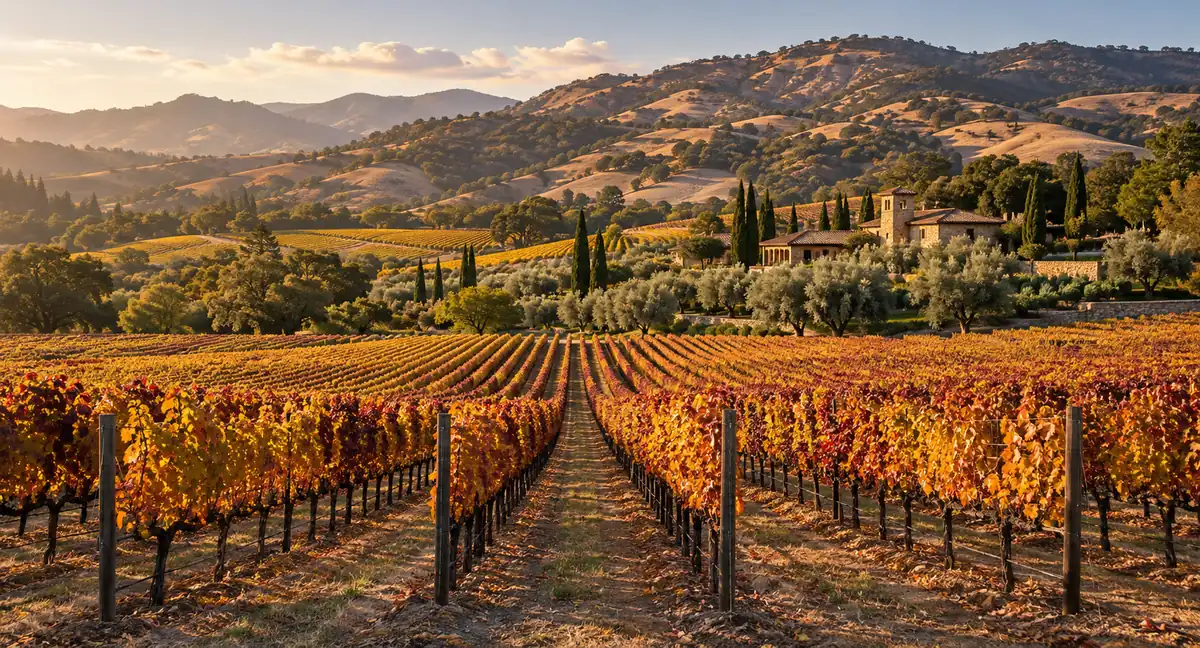
Beyond him, white tables stood beneath olive trees that still possessed their own leaves. Someone was arranging wineglasses for the prospective buyers’ lunch. The October hills rose tawny behind rows of Cabernet, their fruit already harvested.
Sofia crouched beside a painted trunk. Beneath the imported mulch, the soil was pale and crusted.
“I’ll need the landscaping records.”
“The inspection concerns agricultural compliance.”
“Yes,” she said. “It does.”
At thirty-four, Sofia had learned that people generally disliked bad news less than they disliked receiving it from someone in muddy boots.
She worked for the state environmental agency’s agricultural compliance unit, which meant she spent considerable time explaining that a picturesque view was not a laboratory result. Her assignment at Viña Serena had appeared straightforward: inspect chemical storage, review historic land use, and investigate a discrepancy in the environmental documents submitted ahead of a major sale.
Three days, her supervisor had said.
Sofia looked at the dead orchard.
“Also,” she told the manager, “please don’t move any soil.”
The expedited laboratory results arrived Thursday morning while she was eating an egg sandwich in her parked car.
Lead. Arsenic.
High enough in the sampled area to require immediate follow-up, exposure controls, and notification under the pending transaction’s environmental conditions.
She read the quality-control pages first. Then the numbers again.
The synthetic leaves tapped together outside her window.
By ten, she was seated across from Rafael and Isabel Valdureda in a room where the table appeared to have been cut from a single tree.
“This must be contamination from the road,” Rafael said.
“The concentrations increase away from the road.”
“Then your samples—”
“Were collected in duplicate under documented custody. An independent laboratory analyzed them.”
Isabel placed her glasses on the table.
“Are you saying our wine is poisoned?”
“No. Soil results cannot tell me that. Fruit, water, dust, and worker exposure are separate questions. I am saying you have a contaminated area that must be assessed.”
“And the sale?” Rafael asked.
“The buyers must receive the findings. Until we understand the extent, you cannot represent the property as environmentally cleared.”
Outside, a tractor moved between vines with a low, steady growl.
Rafael watched it instead of her.
“We’ve never had any indication of this.”
Sofia wrote down his exact words.
A man was waiting beside her car when she came out. He wore work trousers, an expensive watch, and a shirt with one cuff darkened by water.
“You’re standing against my driver’s door,” she said.
He stepped away immediately.
“Sofia Valdemora?”
“That depends on whether this is another conversation about the landscaping.”
His mouth shifted, almost a smile.
“Alejandro Valdureda. I designed the irrigation retrofit.”
“The owner’s son.”
“Unfortunately, both things are true.”
He held out an envelope.
She didn’t take it.
“What is that?”
“Laboratory reports. Samples I collected in February.”
The wind moved through the dry grass along the parking area. Somewhere inside the winery, bottles struck together.
“Why February?”
“We were laying a new irrigation main beside the old equipment yard. The soil looked wrong. I had it tested before we sent the crew back.”
“And?”
“My father said the consultant would handle it.”
“Did you ask for proof?”
“Yes.”
“When?”
Alejandro looked at her directly.
“Not soon enough.”
She took the envelope.
He was handsome in a way she resented noticing: broad mouth, tired eyes, dark hair pushed back without much success. Thirty-something, self-possessed. But the reports held her attention.
Same laboratory network. Similar pattern. Elevated lead and arsenic.
Attached was an email forwarding the results to Rafael and the estate’s environmental consultant, dated eight months earlier.
“I can receive these as evidence,” she said. “I can’t promise confidentiality if they become relevant to enforcement.”
“I understand.”
“Your own decisions will be examined.”
“I understand that too.”
“People often mean they understand until it happens.”
His jaw tightened.
“Then you’ll have the pleasure of reminding me.”
For the first time that morning, Sofia almost smiled.
Alejandro’s formal interview took place that afternoon with Sofia’s colleague, Priya Navrekar, listening remotely.
He was thirty-seven, trained as a civil engineer in Madrid, and had spent eleven years working on irrigation and water-reuse projects before returning to Napa.
“Why come back?” Priya asked.
“My mother had surgery. My father wanted someone he trusted managing the drought upgrades.”
“And did you supervise work in the affected area after receiving the results?”
“I stopped excavation there. But I accepted the consultant’s assurance that the problem was confined to an old mixing point.”
Sofia turned a page.
“You didn’t ask to see his assessment?”
“I asked. He kept saying it wasn’t finalized.”
“And you kept working elsewhere.”
“Yes.”
The admission settled between them without decoration.
At the end, Alejandro opened a drainage map on the conference table.
“The test location is here. Your dead trees are here.”
Between the two points lay a service road and an old retaining wall.
“This used to be one slope,” he said. “The terrace was built in the nineties.”
Sofia leaned closer.
“What was here before the vines?”
“Pears. Some walnuts.”
Lead arsenate had once been widely used in orchards. It persisted long after trees, owners, and product labels disappeared.
But ordinary historic application didn’t explain everything she was seeing.
“Do you have grading records?”
“Some. My grandfather kept everything until he didn’t.”
“I need access, not a family interpretation.”
“You’ll have both available. You can reject one.”
She looked up.
He had moved his hands off the map so she could read it.
It was a small courtesy. She noticed.
By Friday, Viña Serena had fenced the sampled area, halted nearby excavation, and offered employees paid reassignment. The buyers suspended their timetable.
Sofia’s agency expanded the investigation.
Her immediate objective was precise: establish the source and boundaries of contamination, identify who had known what, and determine whether recent soil movement had carried it elsewhere.
The broader implications were less tidy.
Viña Serena belonged to a network of estates sharing contractors, agricultural roads, and water infrastructure. If contaminated material had crossed property lines, one audit could become a valley-wide investigation.
Sofia’s supervisor approved a coordinated sampling plan. Priya handled records requests while Sofia returned to the field.
Alejandro met her at the pump house with historic aerial photographs and two coffees.
“I didn’t know how you take yours.”
“So you bought two black?”
“I can design a filtration system. I can’t predict milk.”
She accepted one.
He didn’t ask whether she had read his father’s furious statement disputing the agency’s “premature characterization.” That improved the coffee.
They walked the terrace with a portable X-ray fluorescence instrument, using its readings to guide locations for laboratory confirmation.
“Screening only,” she said when he glanced at the display.
“You don’t trust anything?”
“I trust instruments within their limitations.”
“That sounds exhausting in a relationship.”
“It saves time with equipment.”
He laughed, unexpectedly enough that she looked at him.
At the far end of the terrace, the readings fell sharply. A few yards farther on, they rose again beside a maintenance track.
Alejandro studied the ground.
“That’s strange.”
“Why?”
“The old orchard stopped at the wall. This was grazing land.”
Sofia checked the aerial image. He was right.
She marked another sample location.
For the first time, the problem acquired a shape neither of them had expected.
Their most promising lead occupied an entire miserable Saturday.
A 1952 fire-insurance map showed a pesticide shed uphill from the terrace. If chemicals had spilled there and washed downslope, the contamination pattern might follow the old drainage.
Alejandro located the foundation beneath blackberry canes. Sofia’s field technician, Marta, cut a passage while he checked for buried utilities.
By noon, all three were scratched, dusty, and increasingly disappointed.
The foundation was real. So was a broken ceramic sink. But screening readings around the shed were comparatively low, and the slope’s drainage led away from the contaminated terrace.
“Could it have been diverted?” Sofia asked.
Alejandro knelt over the elevations.
“Not without water becoming unusually ambitious.”
They checked anyway.
Two hours later, Sofia closed her field book.
“Wrong source.”
“Expensive blackberry picking,” Marta said.
They ate lunch on the tailgate of the sampling truck. Alejandro produced sandwiches from a paper bag.
Sofia unwrapped hers.
“Did somebody remove the crusts?”
“The winery kitchen has concerns about rusticity.”
“My father picked pears on land like this. He would have charged extra for making bread smaller.”
“Does he still work?”
“His knees retired before he could afford to.”
Alejandro stopped rearranging his sandwich.
“I’m sorry.”
“He doesn’t need your sympathy. He needs the clinic to answer its phone.”
The words came out sharper than she intended.
Alejandro looked across the vineyard.
“When I proposed suspending fieldwork near the terrace, I thought that solved the immediate problem.”
“It solves it if people keep getting paid.”
“They are.”
“Here. What about contractors? The woman cleaning dust out of the equipment cab? The crew sent somewhere else who lose their transport?”
“I don’t know.”
“Find out before you call something solved.”
He nodded once.
No defense. No wounded explanation.
Later, when she was loading samples into the cooler, he said, “You could have said that less harshly.”
“Yes.”
“But you shouldn’t have had to say it twice.”
She looked at him across the truck bed.
That answer stayed with her all the way back to the motel.
On Monday, two neighboring properties reported similar findings.
One had been an orchard. The other, a small family winery called Bellwether, had not.
Bellwether’s owner, Ruth Chng, met Sofia at a gravel loading apron behind her cellar. She had twelve employees and the expression of someone calculating how long she could protect them.
“We bought this parcel in 2001. We’ve never used anything containing lead.”
“I believe you. We’re investigating earlier material movement.”
“Your letter frightened my forklift driver.”
“It should have explained the precautions more clearly.”
“Yes,” Ruth said. “It should.”
Sofia made a note to change the next letter.
A pale strip showed beneath the apron where a delivery truck had broken the edge. Fine soil under angular gravel.
“What went down here?” she asked.
“Fill from Serena. Cheap. Around 2006. We needed the turning space.”
“Do you still have the invoice?”
Ruth gave her a tired look.
“I have every invoice. It’s a character defect.”
The invoice described clean agricultural fill from a contractor now dissolved.
Sofia requested it through the formal process, then stood beside the broken edge while the afternoon wind lifted a little powder from the ground.
Different land histories. Similar metals. The same imported soil.
Back at Viña Serena, Alejandro was checking contractor payroll records.
“The transport company isn’t paying standby time,” he said before she spoke. “I’m getting that corrected.”
“With whose money?”
“Mine, initially. The estate can reimburse it.”
“That doesn’t buy you anything with me.”
He put down his pen.
“Must everything I do be addressed to you?”
She felt heat rise in her face.
“No,” she said. “That was unfair.”
A pause.
Then she laid down the fill invoice.
“I think your terrace used to be somewhere else.”
The surviving earthworks records were incomplete, badly indexed, and stored above the cooperage in boxes that smelled of oak dust.
Sofia secured copies through counsel. Alejandro identified engineering drawings, but every document went into the same logged collection process. Neither of them wanted discoveries that depended solely on his word.
The useful material emerged slowly.
A 1994 aerial photograph showed a shallow rectangular basin behind the old pear-packing building. By 1997, it had vanished.
A grading ledger recorded “basin spoil” being moved to the new terrace.
Later invoices sent material from the terrace stockpile to six neighboring properties.
There was no chemical analysis attached.
Alejandro studied the old photograph.
“I thought that was a fire pond.”
“It could have been.”
“You don’t think so.”
“I think we should find out.”
The packing shed’s records had gone to a county agricultural archive after the cooperative closed. Its inventory promised engineering plans.
The plans were missing.
Instead, an archivist found meeting minutes, repair invoices, and hundreds of fruit-shipping receipts.
Sofia read until the words blurred.
Alejandro, seated opposite, pushed a wrapped tamal toward her.
“Lunch.”
“I’m close.”
“You said that before the lighting changed.”
She ate one-handed.
Near closing time, she found a reference to replacing an agitator in the “fruit-washing settlement system.” Three pages later, a repair bill mentioned removing spray residue from the settling basin.
She turned the page toward Alejandro.
He read it, then pulled the aerial photograph closer.
“An inlet from the packing shed,” he said. “And an overflow here.”
Fruit sprayed with lead arsenate had been washed before shipment. Residue settled out. Years of it.
Concentrated waste, later treated as ordinary dirt.
“The orchard wasn’t the whole source,” Sofia said.
Alejandro traced the basin outline without touching the paper.
“And they spread it around.”
“Somebody did.”
He looked at her.
Even now, she would not give him certainty she hadn’t earned.
He seemed, oddly, relieved.
They left the archive into an evening that smelled of damp pavement and woodsmoke.
Rain was forecast for the weekend—the first serious storm after months of dust.
Alejandro walked beside her to the public parking lot.
“My father’s lawyer called,” he said. “Apparently I’m confused about my obligations.”
“To whom?”
“That was also my question.”
She stopped beside her car.
“He’s asked you to stop cooperating?”
“He’s asked me to remember who paid for Madrid.”
“Did Madrid teach you to call contamination a misunderstanding?”
“No. That part was local.”
She laughed before she could prevent it.
He smiled, then looked away.
For a moment they stood without the investigation between every sentence. She noticed the scar at the base of his thumb, the way he held himself still when he was upset.
“What happened?” she asked, nodding at his hand.
“Pump impeller. Twenty-six. Knew everything.”
“Did that cure it?”
“Temporarily.”
Her phone vibrated. A message from Priya.
The consultant had produced a 2014 report under the agency’s demand.
Sofia opened the attachment.
Sampling around the terrace. Elevated lead and arsenic. A recommendation for delineation and restrictions on soil movement.
Distribution list: Rafael Valdureda. Isabel Valdureda. The vineyard’s general counsel.
Alejandro watched her expression change.
“How long?”
She showed him the date.
He took one step back, as though making room for something physical.
“Eleven years.”
“Yes.”
“My mother too?”
Sofia didn’t answer what the document already had.
He pressed his lips together.
“Don’t let me explain this away tomorrow.”
“That isn’t my job.”
“I know.” He looked at her again. “I’m asking as a person.”
She wanted to touch his arm.
She put the phone away instead.
“You can decide tomorrow to be the same person you were today.”
The confrontation happened the next morning in Viña Serena’s barrel room.
Sofia was there for a scheduled records meeting, with Priya on video and the family’s attorney present. Alejandro had asked to give a supplemental statement.
Rafael stood beneath a row of framed harvest photographs.
“This was historic agricultural use,” he said. “Everyone understood that.”
“Who is everyone?” Sofia asked.
He glanced at his lawyer.
Isabel answered.
“The cooperative had meetings. Consultants told us the material could remain covered.”
“Covered is different from excavated and sold as clean fill.”
“We did not sell it,” Rafael said.
“Charging only for transport doesn’t change where it went.”
Alejandro set a printed email on the table.
“I approved the trench work this winter. I received the February results. Include that in my statement.”
Rafael stared at him.
“You have no idea what you’re doing.”
“I’m correcting that.”
“You think these people will thank you when this valley is buried in lawsuits?”
Alejandro’s face paled, but his voice stayed level.
“I’m not asking anyone to thank me.”
His mother folded her hands.
“If you continue, you cannot remain part of this business. Or expect us to provide for you after treating us this way.”
The attorney began to speak.
Alejandro shook his head.
“Let her finish.”
Silence filled the cool room.
Sofia waited. She hated waiting through this. Intervening would make his decision look like something she had helped extract.
Finally, Alejandro sat.
“My statement,” he said to Priya, “should also include the date I was first told about the 2014 report.”
Afterward, Sofia found him outside beside a hose reel.
“You didn’t have to do that in front of them.”
“I know.”
“Counsel could have submitted—”
“I know, Sofia.”
She stopped.
He looked worn and furious.
“You keep telling me I have agency. Let me have it when the choice is ugly.”
She leaned against the wall beside him, leaving a careful foot of space.
“All right.”
A worker drove past in a small utility cart and raised a hand. Alejandro raised his back.
“My parents built something real,” he said. “My grandfather pruned these vines himself. My mother did accounts at our kitchen table. They weren’t always people who could make problems disappear.”
“That doesn’t change the reports.”
“No. But they’re not only the reports.”
Sofia watched water drip from the hose coupling.
“My father worked for a man who paid for my textbooks one semester. Same man cheated his crew on overtime.”
“What did you do?”
“Kept the books. Helped my father calculate the missing pay.”
Alejandro turned toward her.
“Did you get it?”
“Some.”
He exhaled. The anger left his shoulders by degrees.
“That sounds complicated.”
“It was.”
For the first time, she let him see that she knew.
The storm forecast worsened Thursday.
On Friday morning, Priya obtained the cooperative’s closed meeting records from an insurer’s retained files. The papers did not establish universal knowledge across Napa. They established something narrower and still serious: several operators had received warnings about the former packing basin, while others had accepted fill described as clean.
Some names appeared only on attendance sheets. Others had signed correspondence.
Sofia refused to put them in the same category.
“Thousands of potential claims,” her supervisor said on the coordination call. “And everyone will want a statement by dinner.”
“They can have what we know by dinner. The rest will take longer.”
Then Alejandro called.
“The stormwater contractor is following the current site plan.”
“Meaning?”
“The new detention swale drains into the old cooperative culvert. The survey labels it abandoned. It isn’t.”
He had found the discrepancy by comparing the packing-basin photograph with his irrigation survey. A buried line he had treated as irrelevant ran beneath the boundary road toward Bellwether and two farms downstream.
Sofia pulled up the latest sampling map.
The swale cut through material relocated from the terrace.
“Can they isolate it?”
“I’m asking now. But there’s a second problem. The hillside runoff enters above the swale. Once it fills, contaminated sediment could leave the property.”
The ground that had kept its history for decades was about to move.
By afternoon, rain darkened the vines and hammered the winery’s metal awnings.
The agency’s incident coordinator assembled a containment team. Downstream growers received warnings. Crews closed the agricultural road, protected storm drains, and positioned temporary tanks and pumps.
Sofia arrived in waterproofs with Marta, sample equipment, and a map that was already curling at the edges.
Alejandro met them at the swale.
“The outlet slide gate is seized,” he said. “We can block it temporarily, but then water backs up toward the cellar retaining wall.”
“Can we divert the clean hillside flow before it gets here?”
“Across the upper service track, yes. With the owner’s permission and enough machinery.”
Rafael had offered the contractor a simpler answer: pump the swale out into the drainage channel, then cover the exposed soil.
Sofia looked at the brown water.
“No discharge until it’s characterized.”
“We can’t wait two days for a laboratory,” Rafael said.
“We can hold it.”
“In what?”
Alejandro pointed toward the harvest yard.
“The empty blending tanks.”
His father stared.
“They’re food-grade.”
“And washable. We’ll take them out of production pending proper assessment.”
“You can’t sacrifice—”
“The tanks are replaceable,” Alejandro said.
A gust drove rain under Sofia’s hood.
The incident coordinator approved the temporary storage plan after the contractor checked capacity and connections. But the pumps would only buy time. They needed the upper diversion operating before the heavier rain reached them.
Sofia studied the ground between the track and the swale.
The proposed berm would cross a strip her team had not sampled. Fresh tire cuts exposed pale, fine soil beneath the gravel.
“Stop the excavator.”
Alejandro turned.
“We need that trench.”
“That’s more fill.”
“You haven’t tested it.”
“Look at the layer. Same pale fines beneath angular cap. Bellwether had exactly this profile.”
Rain ran down his face.
“Then where?”
She spread the laminated historic aerial on the hood of a truck and held it down with both hands.
The packing basin. The terrace stockpile. The routes used to move material.
She overlaid the modern survey.
“Here. The old orchard access ridge. It predates the grading, and our samples along it were low.”
“That’s longer.”
“Yes.”
“And the grade—”
“You tell me.”
He bent over the contours, finger moving, lips silent.
Behind them, a pump coughed into life.
“We need a shallow berm, not a trench,” he said. “Route clean water west into the grassed catchment. Keep the contaminated ground capped.”
“Will it hold?”
“If we start now.”
They looked at one another.
“Then start,” she said.
For an hour, the plan worked.
Clean runoff bent around the service track. Brown water rose slowly in the swale while pumps transferred it into isolated tanks. Marta sampled at the culvert’s downstream end; the field crew watched the temporary barrier.
Then the main pump lost suction.
The contractor shouted over the rain. A hose shuddered across the ground.
Alejandro crouched beside the intake screen.
“Leaves and silt. We need the backup intake.”
It was on the other side of the flooded low point, with the truck that had brought it.
A worker started toward the water.
“Road around,” Sofia said.
“That’s twenty minutes.”
“The shoulder’s washed out. Nobody walks through.”
She had seen the edge slump earlier. Under brown water, solid ground and a hole looked identical.
Alejandro caught the worker’s eye and pointed toward the utility vehicle.
“Take the upper road. Radio when you’re across.”
Then he turned back to the pump.
“I can clear this, but we need it shut down.”
Sofia called the coordinator, confirmed remaining storage capacity, and got the shutdown timed with the smaller pump’s restart.
There was no heroic plunge. Just cold hands, tools, and the awful patience of doing things in order.
While Alejandro and the contractor freed the clogged intake, Sofia watched the swale level creep toward the overflow marker.
Ten centimeters.
Eight.
She checked the berm. Water was finding a tire rut at its eastern end.
“More bags here!”
Two crew members came with her. Together they dragged filled barriers into position, boots slipping on wet gravel.
The rut disappeared beneath the barrier.
Water hesitated, then turned west.
At the pump, Alejandro raised one arm.
The engine started.
The hose stiffened. Brown water began moving toward storage again.
Sofia stood in the rain, breathing hard enough to fog her glasses.
Across the swale, Alejandro looked at her.
No smile. Not yet.
He waited until the water fell below the marker.
Then he put both hands on his knees and laughed once, with exhausted disbelief.
They finished after dark.
The contaminated runoff had been contained on site. Downstream checks showed no evidence that the turbid pulse they had feared had escaped; laboratory analysis would follow. The diversion needed overnight monitoring, but the immediate emergency had passed.
Under the equipment shed’s yellow lights, workers ate hot food delivered by Ruth Chng, who said she was feeding people before anyone could invoice her.
Sofia sat on an overturned crate, trying to open a container with fingers that no longer seemed attached.
Alejandro took the container only after she held it out.
“You have defeated several tonnes of water,” he said. “The lid is a surprise.”
“Poor design.”
“Obviously.”
He handed it back open and sat beside her.
Their shoulders touched through wet jackets.
Neither moved for a moment.
Then Sofia stood.
He looked up, and she saw that he understood before she spoke.
“I’m involved in an investigation concerning your family and your own conduct.”
“Yes.”
“And I’m attracted to you.”
The admission left her feeling more exposed than the storm had.
His expression changed slowly.
“Good,” he said. “That last part was becoming difficult to interpret.”
She let out a breath that nearly became a laugh.
“It can’t go anywhere while I’m in this role.”
“I’m not asking you to change the rules.”
“I need to disclose it and have the agency decide how to handle the conflict. You should know before I do.”
He set down his food.
“What happens to the investigation?”
“It continues. Someone else can review my work and take over my decisions. Nothing disappears.”
“Good.”
“Even your part.”
His eyes held hers.
“Especially that.”
She wanted to kiss him badly enough to resent the equipment shed, the rain, and several principles she otherwise valued.
Instead, she picked up her dinner.
“Your soup’s getting cold,” he said.
“That’s an extremely unattractive thing to notice right now.”
At last, he smiled.
The following weeks contained considerably more paperwork than anyone would have chosen for a love story.
Sofia disclosed the situation the next morning. Her supervisor removed her from the case, arranged an independent review of her findings, and referred the matter for ethics guidance. Sofia moved to an unrelated assignment outside the valley.
Priya took over with a senior enforcement investigator.
Sofia and Alejandro did not meet privately during the transition.
They exchanged no evidence through personal messages. Once, he sent a photograph of an aggressively elaborate sandwich.
She replied: Bread deserves representation.
It was enough to make a hotel room in Modesto feel less lonely.
The investigation widened, but it did not become the indiscriminate catastrophe the Valduredas had predicted.
Confirmed contamination affected the former packing site and several receiving properties. Other vineyards tested below levels requiring similar action. Agencies established a shared assessment program, with worker representatives involved in exposure questions and multilingual notices.
The participating estates’ knowledge varied. So did their responsibilities.
Viña Serena’s sale fell apart.
Its owners signed an enforceable interim cleanup agreement while the concealment allegations remained under investigation. Alejandro provided records through his lawyer, accepted scrutiny of his delay, and left his management position.
His parents stopped answering his calls for a while.
Sofia learned those things from him only after her reassignment was settled and the ethics office had given her written guidance permitting a personal relationship with clear restrictions.
By then, the vines had turned copper.
He asked her to dinner.
She said yes before he finished describing the restaurant.
They met in downtown Napa on a cold Friday evening.
Alejandro waited outside a small place with steamed windows, wearing a dark sweater and an expression she hadn’t seen before: uncertainty with nowhere practical to go.
“No maps?” she asked.
“I can get one if you’re uncomfortable.”
“No laboratory reports?”
“Not unless dessert goes badly.”
She laughed, and he looked briefly relieved.
Dinner lasted three hours.
They talked about his years in Madrid, her state-school commute, the semester she worked mornings at a produce warehouse and fell asleep holding a highlighter. He told her about a water-reuse project that had failed because he had designed something the local maintenance crew could not repair.
“So what did you do?”
“Went back. Asked better questions.”
“An expensive education.”
“Yes. My university degree was cheaper.”
She told him how often people mistook her certainty about measurements for certainty about everything else.
“Are you?” he asked.
“Certain about everything?”
“About much outside the measurements.”
“No.”
He rested his hand on the table, palm up.
She put hers in it.
After dinner, they walked beside the river. Light from the restaurants trembled on the dark water. Somewhere a kitchen door opened, releasing heat and the smell of garlic.
Alejandro stopped beneath a tree shedding yellow leaves.
“I’ve been thinking about kissing you since the archive.”
“That early?”
“You were threatening a stapler.”
“It had damaged a historic document.”
“A serious offense.”
She stepped closer.
“I was thinking about it before that.”
His thumb brushed the side of her hand.
“May I?”
“Yes.”
The first kiss was almost careful.
The second wasn’t.
Sofia caught the front of his sweater and drew him closer, feeling his quiet laugh against her mouth before he kissed her again. His hand settled at her waist, warm and firm through her coat.
Weeks of restraint narrowed to his mouth, the cool river air, the extraordinary relief of touching him without needing to step away.
When they finally parted, he rested his forehead against hers.
“Worth the paperwork,” he said.
She laughed so hard she had to hide her face against his shoulder.
In December, Sofia attended a public meeting in the valley as a private citizen, seated well away from the agency table.
She had nearly stayed home.
But her father wanted to hear what was being done for workers, and she had offered to drive him. He wore his good jacket and carried questions in a folded sheet of notebook paper.
At the microphone, he asked who would pay for medical consultations and how former seasonal workers would receive notices.
The answers were incomplete.
He remained at the microphone until the officials explained when the missing information would be available.
Afterward, Alejandro introduced himself in the parking lot.
Her father looked him over.
“You’re the engineer.”
“Yes, sir.”
“The one using wine tanks for dirty water.”
“Temporarily.”
Her father considered that.
“Useful.”
Sofia had to turn away to conceal her smile.
Alejandro’s relationship with his own parents remained harder. Isabel had begun calling on Sundays. Rafael had sent one message asking whether he still had a key to the irrigation control room.
Alejandro sent it back through the estate manager.
He rented a small house and took work with an independent engineering practice. Some clients didn’t want the attention associated with his name. Others wanted someone who understood what a neglected drainage line could cost.
Sofia did not tell him the losses were secretly gifts.
When he was sad, she listened.
When he tried to describe his February delay as merely trusting the wrong consultant, she raised an eyebrow.
“All right,” he said. “I also trusted the convenient answer.”
“Yes.”
“You remain a challenging dinner companion.”
“You invited me again.”
“I’m learning.”
By spring, the contaminated terrace had been isolated under an approved interim cover. The artificial trees were gone.
Long-term remediation would take money, oversight, and years. Litigation had begun. The documented concealment had consequences that no family dinner could settle.
But workers had been contacted. Affected neighboring parcels were mapped. Clean properties were no longer trapped under the same vague suspicion as contaminated ones.
The ground had become a set of responsibilities people could finally name.
Sofia chose to stay with the agency and applied to lead a statewide project on overlooked agricultural fill. She wanted inspectors to ask better questions before a cracked loading apron or a storm supplied the answer.
Alejandro celebrated her appointment by cooking dinner badly.
“The rice is an early-stage material,” he said.
“It’s burned.”
“I appreciate your directness.”
She kissed his cheek and opened a window.
They had settled into a geography neither would have designed alone: her apartment near Sacramento, his house in Napa, weekends negotiated around fieldwork, laundry appearing in the wrong place. They argued occasionally about driving routes and once, more seriously, about his habit of offering solutions before she had finished explaining a difficult day.
He got better at asking.
She got better at saying what she needed.
One Sunday, they drove past the old cooperative land on their way to meet her father for lunch.
From the road, the containment area looked unremarkable: fencing, signs, rainwater controls, new grass where it was safe to grow.
Alejandro slowed at the junction.
“Do you ever miss believing a place is what it looks like?”
Sofia watched a crew moving between the vines. One worker lifted a hand to another, and the row briefly filled with laughter.
“I like knowing what I’m looking at.”
He glanced at her.
“Yes,” he said. “I’ve noticed.”
At his house that evening, they planted herbs in two clean pots outside the kitchen door. He measured the spacing until she took the ruler from him.
“Some things survive approximation.”
“Now you tell me.”
She pressed soil around a rosemary plant. He watered it, carefully, then offered her his muddy hand.
Sofia took it. When he drew her close, she went willingly, leaving a dark thumbprint on his shirt as she kissed him in the last warm light.
Every ending is somewhere new.
Find your next story →